
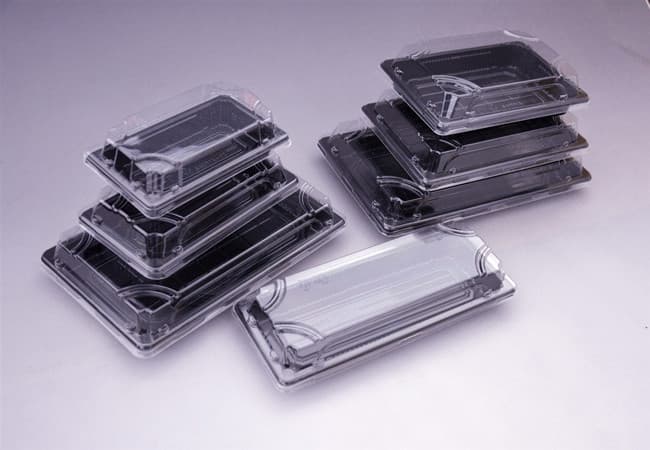
Blister and clamshell packaging products may encounter various issues during production. The main quality problems include crystalline spots, air bubbles, uneven thickness, scratches, stress lines, insufficient vacuum pull, and cracking.
1. Crystalline Spots and Air Bubbles
Crystalline spots and air bubbles are the most common issues at thermoforming facilities. Root causes include:
(1) Raw material quality — whether new material is being used;
(2) Mold type — copper, aluminum, or plaster molds all have different surface quality characteristics;
(3) Production environment — whether there is a cleanroom, whether the area around the machine is clean.
2. Uneven Thickness
Uneven thickness is primarily caused by the temperature control system of the thermoforming equipment. Secondary factors include the quality and consistency of the raw material sheet, and whether the upper mold is properly calibrated.
3. Scratches
Scratches can arise at many stages: raw material handling, machine operation, die-cutting, folding edges, and packaging. If a customer has strict requirements on this, special preventive measures must be taken throughout production.
4. Stress Lines (Draw Marks)
Stress lines arise from two main causes: the material being over-heated, or insufficient pressure from the upper mold. The production supervisor should monitor and adjust both parameters during production.
5. Insufficient Vacuum Pull
Insufficient vacuum pull is mainly caused by inadequate product temperature. It can also occur when the product is relatively deep without sufficient forming pressure. The production supervisor adjusts these parameters.
6. Cracking
Cracking is primarily determined by the properties of the material itself — some materials are inherently brittle. When producing APET, insufficient silicone oil on the material can also cause cracking. Weather is a factor as well: in winter, materials are relatively more brittle, so raw material formulation requires extra attention. Finally, problems with the die blade or improper blade adjustment can also cause cracking during die-cutting.