
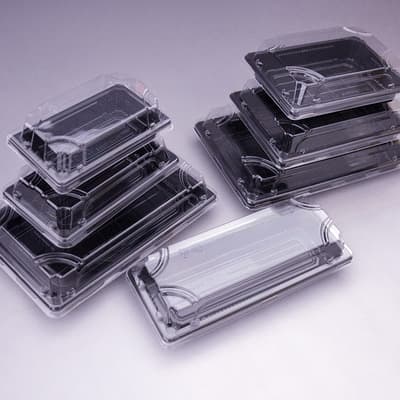
The design of blister fruit boxes varies greatly, with a wide range of materials. We typically determine the product design plan based on material properties, product attributes, and product shape. Below are the design principles for each type of blister fruit box.
Blister fruit boxes can be broadly divided into four categories: plastic sealed, high-frequency sealed, plastic tray, and plastic folded. In practice, these four types are all based on product attributes.
Plastic Sealed
Sealed blister products must use PVC or GAG material, as only these two types can be properly sealed — other materials do not seal firmly enough. When designing this type, we typically use a tray form with a sealing edge of 0.5 to 1 cm.
High-Frequency Sealed
High-frequency sealing machines only work with PVC — other materials cannot be sealed this way. These blister boxes are typically used for industrial products and toys. The design is generally an upper-and-lower thermoform shell form.
Plastic Tray
Tray design depends on the material used. For PP material, the design must account for greater thickness than other materials, as PP thermoforms thinner walls than other materials. For PVC, PET trays and other materials, customers must provide a packaging sample so we can ensure the fit is exactly right.
Plastic Folded
Folded plastic packaging generally uses PVC and PET materials. This type typically uses a 4-snap design so the product snaps together without springing back. The size of the snaps depends on the thickness of the material used to ensure correct engagement.